

Charleston, South Carolina, is consistently voted the best city in the U.S. by Travel + Leisure, drawing millions to its cobblestone streets and pastel antebellum houses. But for those considering a permanent move to the Holy City, the question isn’t just about beauty, it’s about safety.
The short answer: Yes, Charleston is generally safe, particularly in the areas frequented by tourists and sought after by new residents. However, like any growing metro area, safety varies significantly by neighborhood.
This guide goes beyond the headlines to give you the honest reality of crime rates, flood zones, and local living, so you can make your move with confidence.
Where Does Charleston, SC Rank in Crime? (2025 Data)
To understand safety here, you must first understand the geography. Newcomers often confuse Charleston proper (the historic peninsula and immediate suburbs) with the North Charleston metro area. They are separate municipalities with very different crime profiles.
- The 2024-2025 Trend: According to preliminary data from the Charleston Police Department, overall crime in the city has decreased.
- Violent Crime: Dropped by approximately 5.7%.
- Property Crime: Saw a significant reduction of 12.2%.
- The Context: While South Carolina’s violent crime rate sits slightly above the national average, these numbers are skewed by specific “hotspots.” In Charleston’s residential and tourist districts, violent crime is rare. The most common issue is property crime—specifically “crimes of opportunity” like unlocked car break-ins.
Local Insight: The distinction matters. When you see “high crime” stats for the region, they often include data from specific industrial corridors in North Charleston, which can misrepresent the safety of residential neighborhoods like West Ashley or James Island.
Neighborhood Guide: The “Where” Matters
Safety in Charleston is hyper-local. One street can be perfectly quiet, while two blocks over might require extra awareness.
The Safest Areas & Best Places to Live
If safety is your top priority, these neighborhoods consistently rank highest for low crime and family friendliness:
- Mount Pleasant: Often cited as one of the safest cities in South Carolina, this suburb offers top-tier schools and a low violent crime rate (0.8 per 1,000 residents). It is the gold standard for families.
- Daniel Island: A master-planned community with an island-town feel. It is known for its safety, walkability, and golf cart culture.
- South of Broad (Downtown): The historic tip of the peninsula. It is heavily patrolled, well-lit, and generally very safe, though it comes with a premium price tag and tourists peering into your garden.
- Wagener Terrace: A favorite among locals, this area north of the Crosstown (Septima Clark Parkway) offers a community vibe with a “Very Safe” (A-) rating and proximity to Hampton Park.
Areas Requiring Extra Awareness
No city is perfect. Local data suggests exercising caution in:
- North Charleston (Specific Pockets): While areas like Park Circle are thriving and safe, the broader industrial zones along Rivers Avenue have higher crime rates than Charleston proper.
- Central Peninsula at Night: While King Street is safe and bustling, avoid wandering alone into unlit alleys or the “Eastside” areas late at night if you are unfamiliar with the streets.
Safety Scenarios: Tourists, Nightlife, and Commuting
Is Charleston Safe for Tourists?
Absolutely. The Historic District is heavily monitored and relies on tourism. The biggest risks here are scams rather than violence.
- The “Pedicab” Caution: Always agree on a price before you hop in.
- The “Market” Distraction: Watch for distract-and-grab thefts in crowded areas like the City Market.
Is It Safe at Night?
Downtown Charleston is vibrant. King Street is closed to cars on weekends to allow safe pedestrian traffic. However, alcohol-related incidents can happen after 1:00 AM near the college bars. The rule of thumb: stay in well-lit areas where the “Blue Light” cameras are visible.
Transportation & Walking
Charleston is incredibly walkable, but pedestrians face two unique hazards:
- The “Cobblestone Ankle”: Serious ankle injuries happen more often than muggings. Leave the stilettos at home.
- Traffic: Drivers on narrow historic streets can be aggressive. Always use crosswalks—local drivers are known to speed through yellow lights to beat the traffic.
The “Hidden” Danger: Natural Safety Concerns
In the Lowcountry, “safety” isn’t just about people; it’s about the water. This is the single most important factor for new residents.
- Flooding & King Tides: Downtown Charleston floods frequently, even on sunny days during “King Tides.”
- Action Step: When looking at homes, check the FEMA Flood Map aggressively. Ask if the street is passable at high tide.
- Hurricane Season: Running from June to November, locals take this seriously. “Safety” here means having an evacuation plan (know your zone) and non-perishable supplies.
- Pro Tip: Don’t rent or buy a ground-floor unit in a flood-prone area (like the “Crosstown” area) without asking for the property’s flood history.
Living in Charleston: The Real Pros & Cons
Here is the balanced reality of life in the Holy City.
The Pros
- Community: A true “small town” feel where neighbors know each other.
- Lifestyle: World-class food, beaches (Folly, Sullivan’s, Isle of Palms), and history at your doorstep.
- Healthcare: Home to MUSC (Medical University of South Carolina), providing top-level trauma and specialist care—a huge plus for seniors.
The Cons: Why Are People Moving Out?
It is important to be transparent about why some residents leave.
- Cost of Living: Housing prices have skyrocketed. A starter home in a safe area like Mount Pleasant can easily exceed $700k.
- Traffic Infrastructure: Roads like I-526 and the Ravenel Bridge can become parking lots during rush hour. (Though new projects like the Main Road Corridor flyover are underway in 2025 to help this).
- The “Bug” Factor: We call them Palmetto Bugs, but they are giant flying cockroaches. They are a fact of life here, regardless of how clean your home is.
- 2025 Regulations: New laws have tightened restrictions on golf carts (seatbelts now required for kids under 12) and short-term rentals (capped in North Charleston), which impacts some investment buyers.
Moving Checklist for Charleston, SC
If you decide the pros outweigh the cons (and for most, they do), here is your safety checklist:
- Research Flood Zones: Never sign a lease or mortgage without checking the address on the Charleston County Flood Map.
- Secure Parking: If living downtown, ensure you have off-street parking to avoid sideswipes and saltwater flood damage.
- Choose the Right Mover: Moving in Charleston requires navigating narrow alleys, strict HOA rules, and elevator reservations.
Choosing the Right Moving Company
Don’t trust your move to a generic national broker who doesn’t know that a 26-foot truck can’t fit down King Street.
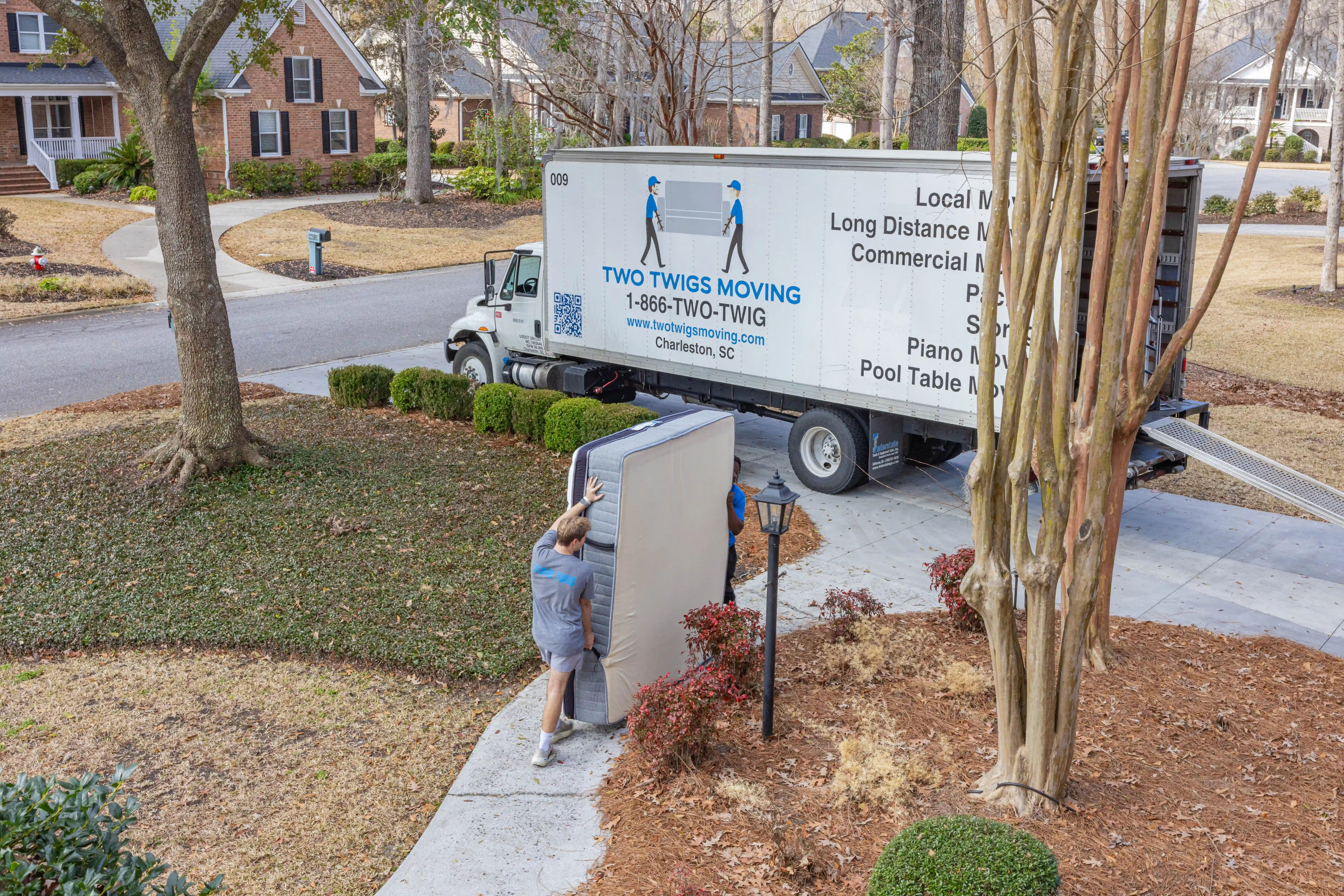
Two Twigs Moving is a local, licensed Charleston mover that understands the unique logistics of the Lowcountry.
- Local Knowledge: We know which streets flood at high tide and how to navigate the historic district’s tight corners.
- Transparent Pricing: No surprise fees for stairs, elevators, or “long carries” down long driveways.
- Full Service: From packing to assembling your bed, we handle the stress so you can handle the excitement.
Frequently Asked Questions
Yes. The downtown area is very safe for solo walking during the day and early evening. As with any city, use rideshares (Uber/Lyft) late at night rather than walking alone on quiet residential streets.
Yes, Charleston is generally safe to walk around, especially in popular areas like the Historic District, King Street, and The Battery. These spots are well-lit, regularly patrolled, and bustling with both locals and tourists. Like any city, it’s best to stay aware of your surroundings, avoid isolated streets late at night, and secure personal belongings. During major events or in late evening hours, sticking to main roads and well-trafficked areas is advised. Overall, Charleston’s walkability and charm make it a great place to explore on foot, especially during the day and early evening.
Yes, Charleston tap water is safe and meets all federal standards, though many locals prefer filtered water due to the taste.
Statistically, it is flooding. Your car is more likely to be damaged by rising saltwater than by a criminal.
.svg)