
When deciding between portable storage pods and storage units, the choice often comes down to cost and convenience. Here’s a quick breakdown:
- Portable Storage Pods: Delivered to your location, allowing you to pack at your own pace. Costs average $149/month, with delivery and pickup fees around $75 each. Monthly rates vary by provider (e.g., PODS: ~$270/month, U-Box: ~$90/month). Ideal for flexibility but generally more expensive.
- Storage Units: You transport your items to a facility. Rates are lower, averaging $107/month for a 10’x10′ unit. Climate-controlled options add $20–$50/month. Costs depend on size and location.
Key factors: Pods save time and effort but cost more. Storage units are cheaper but require more work. Choose based on your budget, timeline, and how much convenience matters to you.
Quick Comparison
| Option | Monthly Cost | Delivery/Transportation | Climate Control | Best For |
|---|---|---|---|---|
| Portable Pods | $90–$270+ | ~$75 per trip | Limited | Convenience, long-distance moves |
| Storage Units | $57–$300+ | Self-transport | +$20–$50 | Lower cost, flexible sizes |
Each has pros and cons, so pick what fits your needs best.
Cost Breakdown: Pods vs. Storage Units
When deciding between portable storage containers and traditional storage units, it’s important to consider not just the monthly rental rates but also the additional fees that can influence your overall costs. Here’s a closer look at the numbers.
Monthly Costs
Portable storage containers, often referred to as “pods”, typically cost around $149 per month, though the exact rate depends on the provider and your location. For example:
- U-Box: About $90 per month
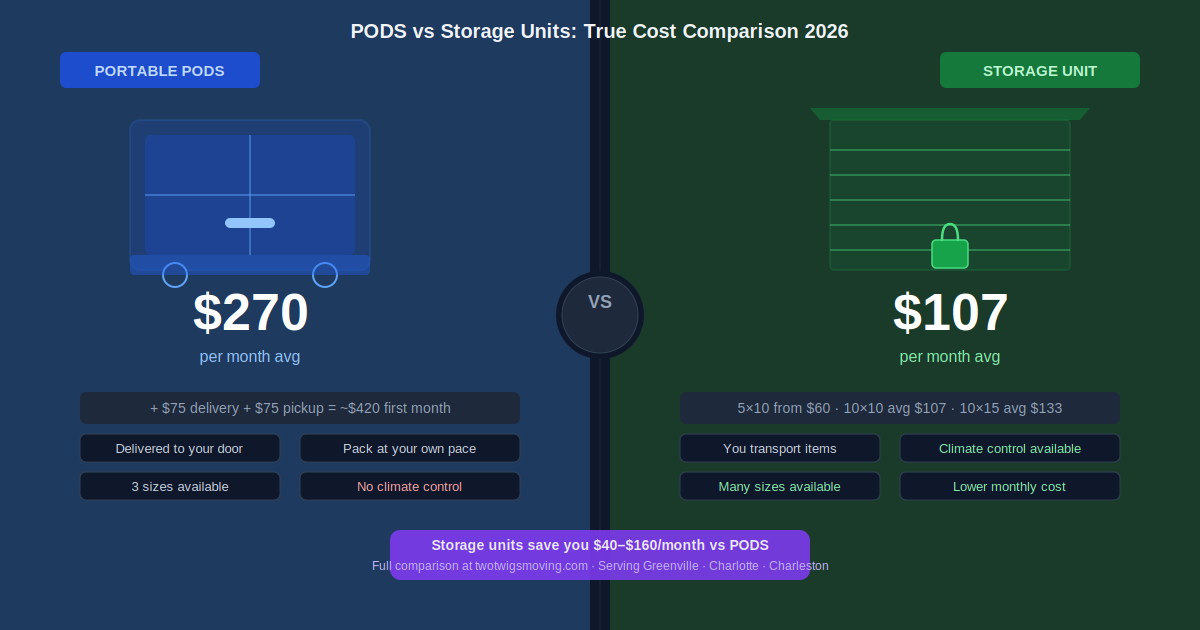
- PODS: Averages $270 per month
- 1-800-Pack-Rat: Generally $127 per month
On the other hand, traditional storage units are often more affordable. Nationwide, the average rental rate for a 10′ x 10′ unit is approximately $107.11 per month, while a 10′ x 15′ unit averages around $132.97 per month. However, location plays a big role in pricing. For instance:
- In Las Vegas, Nevada, a 5′ x 10′ unit might cost as low as $60 per month.
- In Los Angeles, California, the same size unit could be priced around $155.81 per month.
If you need climate-controlled storage, expect to pay an additional $20–$50 per month on top of the standard unit rental. Even with this added cost, traditional storage units often remain less expensive than pods.
Extra Fees and Charges
The base rental rate is just one part of the equation. Both pods and storage units come with additional costs that can impact your budget.
- Pods: Delivery and pick-up fees are common, averaging around $74.99 per trip. If you need both delivery and pick-up, you’re looking at an extra $150 on top of your monthly rental.
- Storage Units: With traditional units, you’re responsible for transporting your belongings, which means factoring in fuel costs, vehicle wear and tear, or even renting a truck.
In some cities, placing a pod on your property may require a permit, with fees ranging anywhere from $50 to $500. Urban areas might also charge higher delivery fees due to parking restrictions or other logistical challenges.
Cost Comparison Table
| Storage Option | Monthly Cost | Delivery/Transportation | Climate Control | Total Monthly Est. |
|---|---|---|---|---|
| Portable Pod (PODS) | $270 | ~$75 per trip | Included | $270–$345 |
| Portable Pod (U-Box) | $90 | $70–$120 per trip | Included | $90–$210 |
| Storage Unit (5×10) | $60–$156 | Self-transport | +$20–$50 | $80–$206 |
| Storage Unit (10×10) | $107–$235 | Self-transport | +$20–$50 | $127–$285 |
While traditional storage units are generally cheaper, the convenience of having a pod delivered to your doorstep can be a game-changer, especially during a hectic move. With pods, you avoid the hassle of multiple trips to a storage facility, which might make the higher costs worth it for some.
Storage Costs in Greenville SC, Charlotte NC, and Charleston SC
If you’re planning a move in the Carolinas, national averages only tell part of the story. Storage costs in Greenville, Charlotte, and Charleston each have their own pricing landscape and knowing local rates can save you hundreds of dollars before you even start packing.
Greenville, SC Storage Costs
Greenville’s growing population has pushed storage demand up in recent years, but it remains more affordable than larger metros. A standard 10×10 storage unit in Greenville typically runs $85–$130 per month with climate-controlled options adding $20–$40 on top of that. The city’s hot, humid summers make climate control worth considering if you’re storing wood furniture, electronics, or documents for more than a month.
For PODS in Greenville, expect delivery fees on the lower end of the national average around $65–$80 per trip since the city is well-served by PODS locations. Monthly container rental rates still average $149–$270, depending on size, making traditional storage units the more budget-friendly choice for most Greenville residents.
Two Twigs tip: If you’re moving within Greenville or relocating from another Carolina city, a full-service move with Two Twigs Moving is often comparable in total cost to one month of PODS rental plus delivery without the hassle of packing and unpacking twice.
Charlotte, NC Storage Costs
Charlotte is one of the fastest-growing cities in the Southeast, and storage prices reflect that demand. A 10×10 unit in Charlotte averages $110–$160 per month, with prime locations near Uptown or South End running higher. Climate-controlled units in Charlotte are particularly popular given the city’s temperature swings between seasons.
PODS delivery fees in Charlotte can run slightly higher than in smaller markets, expect $75–$95 per trip due to the city’s size and urban density. If you’re moving into an apartment or condo community in Charlotte, check HOA rules first: many communities restrict where pods can be placed, which could force you into off-site storage and add to your monthly cost.
Two Twigs tip: For apartment moves in Charlotte one of the most common move types in the city a professional moving crew is almost always faster and cheaper than the PODS delivery + pickup fee combination.
Charleston, SC Storage Costs
Charleston’s coastal location and booming real estate market make it one of the pricier storage markets in the Carolinas. A 10×10 unit in Charleston averages $120–$175 per month, with downtown and peninsula locations at the top of that range. Climate control is near-essential in Charleston’s year-round heat and humidity wood, leather, and electronics can suffer without it.
PODS delivery in Charleston averages $75–$90 per trip. One important local consideration: Charleston’s narrow historic streets and strict parking rules in the downtown peninsula can make placing a pod difficult. Many residents end up storing their container off-site at a PODS facility, which adds cost and limits access.
Two Twigs tip: For Charleston moves, especially in or near the historic district, a full-service moving team navigates tight streets far more efficiently than a pod delivery truck. Two Twigs Moving serves the entire Charleston area with moves that are typically completed in a single day no waiting on delivery windows or pickup scheduling.
Factors That Affect Storage Costs
When deciding between storage options, several key factors can influence your overall costs. By understanding these variables, you can make a choice that aligns with your budget and storage needs.
Storage Duration
How long you plan to store your belongings plays a major role in determining costs. Pods are often chosen for their convenience – they’re delivered right to your location, eliminating the need for multiple trips to a storage facility. However, this convenience typically comes with a higher monthly price tag.
Many storage companies offer discounts for longer commitments. If your storage needs extend beyond three months, it’s worth asking about promotional rates. On the other hand, if you’re only storing items for a short time, traditional self-storage might be the cheaper route. As Guardian Storage points out:
“Self-storage will typically be a more cost-efficient option, especially if you are only planning to store short term.”
Additionally, keep in mind that pods come with delivery and pickup fees, which can add up quickly for short-term storage. This makes understanding your timeline essential when weighing your options.
Location and Access
Where you live can significantly affect both cost and convenience. Urban areas tend to have higher prices for both pods and storage units due to higher real estate and operational costs. As Sparefoot explains:
“Just as apartment rentals run higher in major metro areas where real estate is in high demand, storage can be pricier, too. Prices can be lower in less densely populated areas.”
In large cities, pods can save you the hassle of navigating moving trucks through congested streets. However, pod costs and storage unit rates can vary widely depending on the region. For example, storage in Los Angeles will likely cost more than in smaller cities like Peoria, Illinois.
Urban dwellers also face unique challenges. Some apartment complexes or homeowners associations don’t allow pods to be placed on their property, which may require storing the container at the company’s facility. While storage facilities often provide 24/7 access, pods stored off-site might have restricted access hours. If you can keep a pod on your property, it offers maximum convenience, but this isn’t always an option in urban settings.
Size and Space Options
The size of the storage space you need is another factor that impacts costs. Traditional storage facilities typically offer a wide range of unit sizes, so you only pay for the space you actually use. Pods, on the other hand, are available in just three standard sizes: 8-foot, 12-foot, and 16-foot containers.
This lack of flexibility in pod sizes can sometimes lead to inefficiencies. For instance, if you don’t fill an entire container, you’re still paying for the unused space. An 8-foot PODS container might work well for a studio or one-bedroom apartment, while a 16-foot container is better suited for a three- to four-bedroom home. In contrast, a 10×10 storage unit – commonly used for belongings from a one- to three-bedroom home – often costs less per month and provides more sizing options.
Efficient packing is especially critical with pods. Poor use of space could mean needing an additional container, which doubles your costs for both rental and delivery. Traditional storage units can be more forgiving in this regard, as you can often find a size that matches your exact needs.
sbb-itb-a5538b6
Portable Storage Units: What Are They and What Do They Cost?
Portable storage units sometimes called portable storage containers or mobile storage units — are the same product as PODS, just described differently by different people. Whether you search for “portable storage units,” “portable storage containers,” or “PODS,” you are looking at the same concept: a container delivered to your door that you fill at your own pace.
The cost of portable storage units depends on the provider and your location. Nationally, portable storage unit costs range from $90 to $270 per month before delivery fees. U-Box by U-Haul is the cheapest portable storage option at around $90 per month. PODS is the most widely available but most expensive at around $270 per month. 1-800-Pack-Rat falls in the middle at around $127 per month.
When comparing portable storage unit costs, always look beyond the monthly rental rate. Delivery fees add $65 to $95 per trip depending on your location, and pickup adds another similar fee on top. For a single month of storage, your true portable storage unit cost is typically $200 to $420 all-in depending on the provider you choose.
For residents in Greenville SC, Charlotte NC, and Charleston SC, all major portable storage unit providers operate in the area. However, traditional storage units remain significantly cheaper for most situations, and full-service movers like Two Twigs Moving often beat the total cost of a portable storage unit rental for local moves.
Pros and Cons of Each Option
When deciding between portable storage pods and traditional storage units, it’s important to weigh their benefits and drawbacks. Each option offers distinct features that could influence your decision based on your priorities, whether it’s convenience, cost, or accessibility.
Portable Storage Pods
Portable storage pods are all about convenience. They’re delivered right to your doorstep, allowing you to load and unload at your own pace without worrying about facility hours. This makes them a great choice if you value flexibility and want to avoid multiple trips to a storage facility.
That said, this convenience comes with a higher price tag. Renting an eight-foot pod typically costs around $155 per month if stored on your property and $185 per month if kept at an off-site facility. These costs reflect the added benefit of door-to-door service.
However, pods aren’t without limitations. They come in standard sizes (8-foot, 12-foot, and 16-foot), which may not suit everyone’s needs. Additionally, they lack climate control, which could be an issue for temperature-sensitive items. Parking restrictions in certain areas, like apartment complexes or neighborhoods with homeowners associations, may also force you to store the pod off-site, reducing accessibility.
| Pros | Cons |
|---|---|
| Delivered to your location for easy access | Higher monthly costs ($180–$300) |
| Load and unload only once | Limited size options |
| Flexible schedule for packing | No climate control for sensitive items |
| 24/7 access if stored on-site | Vulnerable to weather exposure |
| High security with tamper-proof locks | Parking restrictions may apply |
These features make portable storage pods a convenient option, but their higher costs and potential limitations might push you to consider traditional storage units instead.
Storage Units
Traditional storage units are a more budget-friendly choice, especially for short-term needs. On average, a 10×10-foot unit costs about $122 per month nationwide, while smaller 5×10-foot units average around $75 per month. Depending on the size and location, prices can range from $57 to over $300 per month, making them a cost-effective alternative to pods.
One major advantage of traditional units is the variety of sizes available, so you only pay for the space you need. Many facilities also offer climate-controlled units to protect your belongings from extreme temperatures and humidity. Security is another strong point, with features like surveillance cameras, gated access, and on-site staff.
The downside? You’ll need to handle transportation yourself. This means loading your items, driving to the facility, and unloading them into the unit. Access can also be limited by the facility’s operating hours, which might not work for everyone’s schedule.
| Pros | Cons |
|---|---|
| Lower monthly costs ($57–$300+) | Requires transportation to and from the facility |
| Wide variety of unit sizes | Limited access during facility hours |
| Climate-controlled options protect sensitive items | Multiple trips may be necessary |
| Strong security measures in place | Travel time and fuel costs add up |
| Easy to switch to a different unit size if needed | Less convenient for frequent access |
Traditional storage units are ideal if you’re looking to save money and don’t mind the extra effort of transporting your belongings.
Ultimately, the decision between portable pods and storage units boils down to what matters most to you. If convenience and flexibility are your top priorities, pods might be worth the extra cost. On the other hand, traditional storage units offer a more economical option for those willing to handle the logistics themselves.
Choosing the Right Option
When deciding between storage options, it all comes down to your priorities and budget. Each option caters to different needs, so your choice should align with your specific storage requirements for a short-term move. Here’s a breakdown to help you make a clear decision.
Summary of Cost Differences
Traditional storage units typically cost between $57 and $300 per month. For reference, a 10×10-foot unit averages around $122 per month, while a smaller 5×10-foot unit costs about $75 per month. On the other hand, portable storage pods are pricier, averaging $149 per month, plus around $75 each for delivery and pickup. This brings the total monthly cost for pods to somewhere between $180 and $300. Keep in mind, additional fees like move-in deposits or climate-control charges may apply for traditional units.
If you’re looking to save money, consider moving between October and April, when seasonal rates are typically lower. For budget-conscious movers, traditional storage units are often the more affordable option. However, if saving time and enjoying added convenience are your priorities, portable storage pods might be worth the extra cost.
Two Twigs Moving Solutions
For those planning moves in Charlotte, Charleston, or Greenville, Two Twigs Moving offers a streamlined approach with integrated storage solutions and customizable moving packages. Their services are designed to make your transition as smooth as possible, no matter which storage option you choose.
What should I consider when choosing between a portable storage pod and a traditional storage unit for short-term needs?
When deciding between a portable storage pod and a traditional storage unit for short-term needs, it’s important to weigh factors like convenience, cost, and security. Portable storage pods are incredibly flexible – they’re delivered right to your location, making them a great option for moves, home renovations, or temporary storage solutions. On the flip side, traditional storage units often provide enhanced security and are a better fit for items you plan to store in one place for a longer period.
Think about how long you’ll need storage, whether easy access to your belongings is a priority, and if mobility matters to you. With portable pods, you skip the hassle of transporting your items since they’re brought to you. Traditional storage units, however, require you to handle transportation to and from the facility. By assessing your specific needs, you can determine which option suits your situation best.
How do location and access rules affect the cost and convenience of storage pods versus traditional storage units?
Location and access rules play a big role in determining the cost and convenience of storage options. Traditional storage units often offer extended hours and straightforward access, making it easy to retrieve your belongings when needed. However, these conveniences can come with a higher price tag, as facilities must cover maintenance and security expenses.
Storage pods, on the other hand, bring flexibility by delivering the storage unit directly to you. That said, accessing your items often requires scheduling ahead of time, which can be inconvenient and may lead to extra fees if you need frequent access. Additionally, factors like local rules about where a pod can be placed or restrictions on access hours can impact how practical or budget-friendly this choice is for your situation.
Are there any extra costs I should know about when using storage pods or storage units?
When considering storage options, it’s important to factor in potential extra costs that might come with both storage pods and traditional storage units.
For storage pods, you could face charges for delivery, pickup, or extending your rental period. While some companies might waive certain fees, it’s always a good idea to double-check these details beforehand.
On the other hand, traditional storage units might come with fees like late payment penalties, mandatory insurance, or additional costs for special handling. In both cases, the longer you use the service, the more your expenses can grow. Be sure to go through the pricing details and terms thoroughly to avoid unexpected charges.
Related posts
- Local vs Long Distance Moving: Which Costs More?
- Best Moving Boxes: Cardboard vs Plastic Bins
- Moving Day Problems: Quick Solutions Guide
- Top 8 Moving Supplies Every Move Needs
| City | 10×10 Storage Unit | PODS Monthly | PODS Delivery Fee | Climate Control? |
|---|---|---|---|---|
| Greenville, SC | $85–$130/mo | $149–$270/mo | ~$65–$80/trip | Recommended (summer heat) |
| Charlotte, NC | $110–$160/mo | $149–$270/mo | ~$75–$95/trip | Yes — seasonal swings |
| Charleston, SC | $120–$175/mo | $149–$270/mo | ~$75–$90/trip | Essential (coastal humidity) |
Accordion contPODS charges an average of $270 per month for container rental in 2026. On top of that, you will pay a delivery fee of around $75 when the container is dropped off and another $75 when it is picked up, bringing your true first-month cost to approximately $420. Prices vary depending on your location and container size. An 8-foot container costs less than the larger 16-foot option. If you need storage for several months, PODS offers discounts for longer commitments, so it is worth asking about promotional rates before you sign.ent.
No. Traditional storage units are almost always cheaper than PODS on a monthly basis. A standard 10×10 storage unit averages $107 per month nationwide, while PODS containers average $149 to $270 per month before delivery fees. When you factor in PODS delivery ($75) and pickup ($75), the cost gap widens further. For residents in Greenville SC, Charlotte NC, and Charleston SC, local storage units typically run $85 to $175 per month. The main reason to choose PODS over a storage unit is convenience, not cost.
Renting a pod for one month typically costs between $90 and $420 all-in depending on the provider and your location. Here is what to expect from the major providers in 2026:
U-Box (U-Haul): around $90 per month plus $70 to $120 delivery
1-800-Pack-Rat: around $127 per month plus delivery fees
PODS: around $270 per month plus $75 delivery and $75 pickup
The monthly rate is never your true total cost. Delivery and pickup fees add $150 or more on top of your first month. If you only need storage for under 60 days, a traditional storage unit is almost always the cheaper option.
U-Box by U-Haul is the cheapest portable storage pod company in 2026, averaging around $90 per month. It is significantly cheaper than PODS ($270/month) and slightly cheaper than 1-800-Pack-Rat ($127/month). U-Box delivery fees range from $70 to $120 per trip depending on your location. The tradeoff is that U-Box has fewer service locations than PODS and slightly less flexible scheduling. For moves in Greenville SC, Charlotte NC, and Charleston SC, all three providers operate in the area so it is worth getting quotes from each before committing.
For local moves in the Carolinas, hiring a full-service moving company is often cheaper than the combined cost of a PODS rental. One month of PODS rental at $270 plus delivery at $75 and pickup at $75 already totals $420 before you move a single box. Two Twigs Moving offers full-service moves in Greenville, Charlotte, and Charleston including packing, loading, transport, and unloading in a single day, often at a comparable or lower total cost with none of the waiting on delivery windows or pickup scheduling.
When choosing between a portable storage pod and a traditional storage unit, weigh convenience, cost, and security. Portable storage pods are flexible and delivered to your location, making them a great option for moves, home renovations, or temporary storage. Traditional storage units often provide enhanced security and are a better fit for items you plan to store in one place for a longer period. Consider how long you will need storage, whether easy access is a priority, and whether mobility matters to you.
.svg)